
Is weed bad for you?
Occasional use in healthy adults is low risk, but daily use, starting young, smoking, or having mental health issues raises harm. Short-term effects include memory and attention changes, and heavy long-term use can affect motivation and learning.
Why do people smoke weed?
To relax, sleep better, boost mood, socialize, and enjoy food, music, or sex.
Is weed legal?
Laws differ worldwide. In Malta, adults 18+ can possess up to 7 grams in public, keep 50 grams at home, grow up to four plants, and buy through non-profit clubs.
How does weed affect your brain?
THC affects memory, learning, and emotion. Using before 25 can change brain structure, and heavy long-term use can reduce attention and learning, sometimes improving after abstinence.
Who should avoid weed?
Young people, pregnant or breastfeeding adults, anyone with psychosis, bipolar disorder, severe anxiety or depression, heart or lung issues, or people on medications that interact with THC.
Is daily use safe?
Daily use raises the risk of cough, lung irritation, cannabis use disorder, and psychosis, especially with high-THC products.
Can cannabis cause dependence?
Yes. Regular use can lead to tolerance and withdrawal. A tolerance break can help reset your brain and make weed feel effective again at lower doses.
Can I drive after using weed?
No. Cannabis affects reaction time, lane control, and decision-making. Avoid driving for at least 4 hours after smoking and longer after strong edibles.
How can I reduce risks?
Wait until your brain is fully developed, avoid daily use, choose lower-THC or balanced products, don’t mix with alcohol or other drugs, buy legal, tested weed, and inhale briefly if smoking.
How much is too much?
There’s no universal number, but more than 3-4 joints a day is high risk. If weed starts affecting work, study, relationships, motivation, or mood, that’s too much.
Is weed bad for you?
Short answer: kinda. Weed is not harmless, but it is not equally risky for everyone. Occasional low-dose use in healthy adults is considered relatively low risk. Daily use, however, starting young, smoking, and mental health problems significantly increase harm.
Here’s what happens to your body and brain:
- Cannabis can affect memory, attention, and decision-making right after use.
- Heavy long-term use is linked to learning problems and reduced motivation.
- Daily use raises the risk of anxiety, depression, psychosis, cannabis use disorder (CUD), and lung irritation.
Even if it doesn’t feel like it, your brain and lungs notice every puff. Real bummer.
Table of Contents
Why do people smoke weed?
People use weed to:
- Relax, sleep better, boost mood, socialize, and manage pain
- Make food, music, and sex more fun.
In surveys of young adults, top reasons include “to relax,” “to feel good,” and “to help with anxiety or sleep.”
Using weed as a daily coping tool for stress, boredom, or low mood makes dependence more likely and can make quitting harder later on.
Is weed legal?
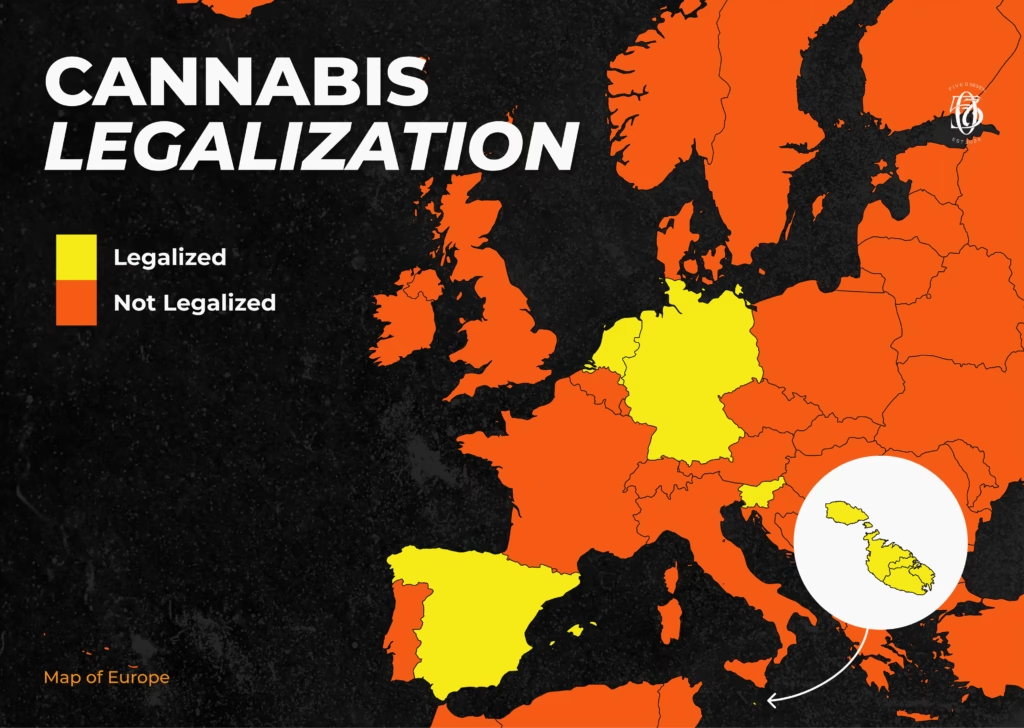
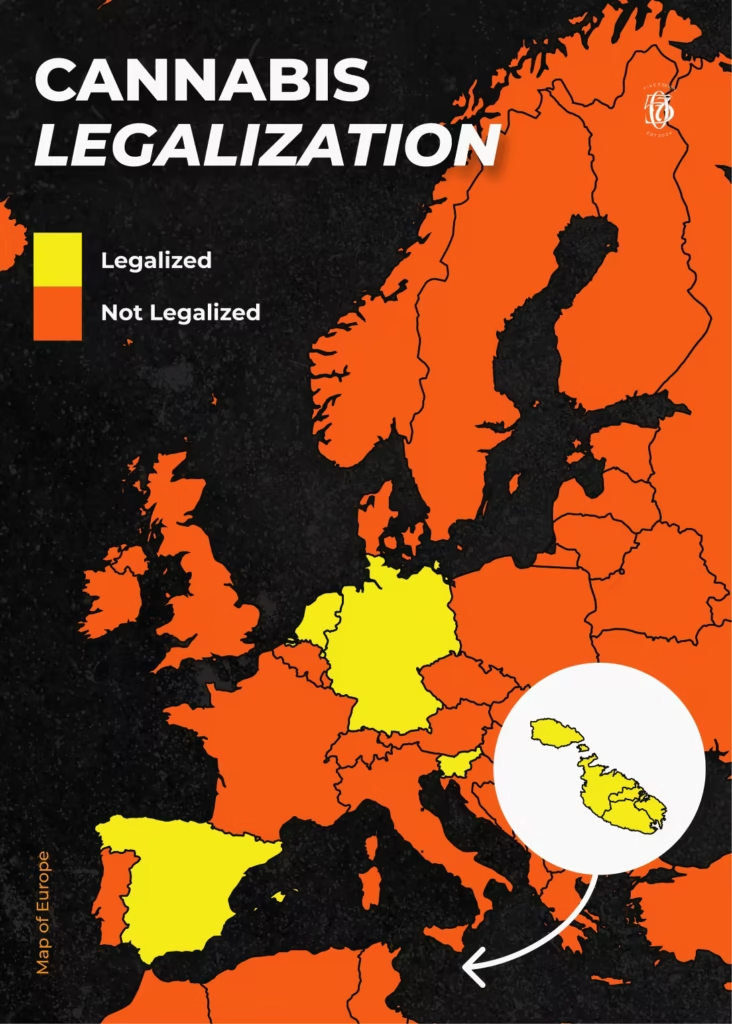
Weed laws are a patchwork worldwide.
- Some places allow recreational use. For example, Canada, several U.S. states, and Malta’s non‑profit clubs (although Malta is slightly smaller 😄) .
- Others allow only medical use, and many still treat possession as a crime.
Even where cannabis is legal, there are rules on age limits, possession caps, home growing, public use, and strict penalties for drug‑impaired driving.
In Malta, adults 18+ can legally possess up to 7 grams in public, keep up to 50 grams at home, and grow up to four plants for personal use, but use must stay out of public view and away from minors.
Cannabis can only be bought through non-profit Cannabis Harm Reduction Associations (CHRAs) that must follow strict ARUC rules on membership. We cover cannabis legislation extensively in our Playbook to Cannabis Clubs in Malta.
Is weed safe or not?
Think of weed as “lower risk with smart use,” not “safe like water.”
Health Canada highlights ways to reduce risk: start later (after your early 20s), use less often, choose lower THC, avoid smoking, and never mix with alcohol or other drugs. Risks include:
- Short‑term anxiety
- Paranoia
- Poor coordination
- Long‑term breathing issues
- Dependence
- Mental health problems
Why method matters:
Smoking delivers THC fast but also brings toxins and irritants that can irritate the lungs, increase bronchitis risk, and strain blood vessels. Vaping isn’t automatically safe – some concentrates are linked to severe lung injury. Both can raise heart rate and blood pressure.
Other factors:
- Age: Under 25? Higher risk for lasting brain effects.
- Potency: High-THC oils or waxes boost mental health risks.
- Method: Smoking hits lungs hardest; edibles skip lung damage but still affect brain and heart.
Who should not smoke weed?
Some people sit firmly in the “better not” category, especially when it comes to smoking.
- Young people: Your brains are still developing until around age 25, and early heavy use is linked with worse learning and more mental health issues.
- Psychiatric Conditions: Personal or family history of psychosis, bipolar disorder, or severe anxiety/depression can be worsened by THC.
- Pregnant or Breastfeeding: THC can affect fetal brain development and can pass into breast milk.
- Heart, Lung, or Other Health Issues: THC increases heart rate, lung irritation, and can affect organ function.
- Medication Users & Addiction History: Cannabis can interact with medications and lead to dependence in susceptible people.
Is weed bad for your brain?
THC plugs straight into the brain’s cannabinoid system, which helps regulate mood, memory, and learning.
Using cannabis before 18 is linked to changes in brain structure and function in areas tied to memory and emotion, including the hippocampus and amygdala, with some studies showing reduced grey matter in heavy users (Neuropsychopharmacology). Heavy long‑term use is associated with lower scores on attention, learning, and memory tests, sometimes improving after weeks of abstinence, but not always back to baseline.
Because teen brains are still wiring up, multiple agencies recommend delaying any use for as long as possible, ideally until after age 25.
Is weed every day healthy?
Daily use is where the “is weed bad for you” answer leans hardest toward “yes, at least for some parts of your life.”
Frequent smoking for years is linked to chronic cough, bronchitis‑like symptoms, and reduced lung function. Daily use is also strongly associated with cannabis use disorder and a higher risk of psychosis, especially with high‑THC products.
One European study found daily high‑potency use was linked to about a 3-5x higher risk of psychotic disorder compared to never using cannabis.
Weed smokers lungs
Five years of regular smoking usually leaves a calling card on the lungs.
Regular cannabis smokers report more chronic cough, phlegm, and bronchitis‑type symptoms than non‑smokers, particularly when they also smoke tobacco. Inflammation and wheezing are common from repeated deep inhalation, even if long‑term diseases like COPD are less clearly linked to cannabis than tobacco.
If you do smoke, not holding the smoke for more than a second or two reduces irritation without cutting the effect in a big way.
When should you avoid weed?
General rule: avoid weed when safety, other people, or a developing brain are involved.
Skip cannabis before and during safety‑sensitive work, driving, or looking after kids or vulnerable people. A cautious guideline is to avoid cannabis for 24 hours before on-call duty.
Also avoid use if you are pregnant or breastfeeding, have serious heart, lung, or mental health conditions, or are on medications that may interact with THC or CBD.
When to stop smoking weed while pregnant?
Health agencies are blunt here: the safest option is no cannabis at all during pregnancy and breastfeeding.
THC crosses the placenta and can affect fetal brain development, and some studies link prenatal exposure to lower birth weight and later behavioral or learning issues. Because THC is stored in body fat and released slowly, stopping as early as possible during pregnancy reduces ongoing exposure.
Anyone using cannabis for medical reasons during pregnancy should talk with a clinician about safer alternatives for nausea, sleep, or pain.
How old do you have to be to smoke weed?
Legally, minimum ages vary, typically 18-21 depending on the country or state. In Malta’s club model, adults must register and follow ARUC rules (18+), with limits on how much can be dispensed per month.
Biologically, risk is higher until at least the early 20s because of ongoing brain development, with greater impact on learning, memory, and mental health when use starts young.
Don’t mix: cannabis, alcohol, and other drugs
Mixing substances is a fast track to “too high, too messy.”
Combining cannabis with alcohol or sedating medications boosts impairment and crash risk more than either alone and can worsen nausea, vomiting, and panic. Cannabis also interacts with some prescription drugs (for example, blood thinners, and sedatives), so anyone on regular meds should check with a clinician.
Polysubstance use (mixing multiple drugs) is a strong predictor of bad outcomes in young people who use cannabis.
Don’t drive high
Driving high feels fine to many people, but the stats disagree.
A large review found that cannabis use almost doubles crash risk when driving soon after getting high.
Cannabis has negative effects on staying in your lane, reaction time, and decision‑making. One lab study using driving simulators found increased lane weaving and poorer driving performance after THC, even when drivers thought they were “okay”.
Just get a cab. It’s not worth it. If you see your buddy reach for his car keys after cannabis use – step in immediately. Explain you don’t feel it’s safe and offer to call him a taxi instead. Better lose a couple of bucks than lose a friend.
Harm‑reduction advice: don’t drive or operate heavy machinery for at least 4 hours after smoking, longer after strong edibles or concentrates, and never if you still feel high.
Buy legal weed and watch potency
Legal does not mean harmless, but it does provide more control and fewer unknowns.
Legal products are tracked “seed to sale,” lab tested for potency and contaminants like mould, heavy metals, and banned pesticides, and labeled so you can see THC/CBD content. Studies of illicit cannabis have found contamination with pesticides and other chemicals that would fail regulated testing.
Modern weed is stronger than in the old days: typical THC levels in flower have more than doubled compared to the 1970s, and concentrates can exceed 70-80% THC. High‑potency products make anxiety, paranoia, and psychosis‑like experiences more likely, especially in vulnerable people.
How many joints a day is too much?
There is no universal “safe” joint count, as it depends heavily on the individual. Generally, smoking more than 3-4 joints a day would be considered excessive for most people.
Guidelines classify daily smoking as high risk, with clear increases in dependence and mental health problems compared to occasional use. If someone is smoking several joints a day, noticing tolerance, or struggling to cut back, that pattern may point toward cannabis use disorder.
A good personal check‑in: if weed is starting to mess with work, study, relationships, money, motivation, or mood, then “how many” is already too many for you.
What is a tolerance break?
A tolerance break (T‑break) is a planned pause from weed so your brain’s cannabinoid receptors can “reset” a bit.
Regular THC use makes those receptors less responsive, so you need more to feel the same effect. A few weeks off can dial that tolerance back down. Research on receptor recovery suggests noticeable changes after several weeks of abstinence, with some people reporting better sleep and clearer thinking.
When restarting after a T‑break, it is smart to come back with lower potency and fewer sessions, rather than jumping straight back into “wake and bake” territory.
If you use weed, use it smarter
For anyone still asking, “Is weed bad for you?” a more useful question is “how can you make it less bad for you?”
- Delay use as long as possible, avoid daily patterns, and prefer lower‑THC or balanced THC:CBD products.
- Don’t mix with alcohol or other drugs, do not drive for at least 4 hours after smoking (longer for edibles), and skip it if pregnant, breastfeeding, or high risk.
- Buy legal, tested products, and if you smoke, do it less often and without extended breath‑holding.
To sum it up; try to wait until you’re fully developed before consuming weed. Avoid it if you’re pregnant or have a history of mental health conditions. Be mindful of the potency and amount. Be honest with yourself about the risks and practice practical harm‑reduction.
507 Club Members: Ask about low-THC options and tips on safe use. Our budtenders are always thrilled to help.
With a little planning and care, you can enjoy cannabis safely while keeping your brain, lungs, and life in check.
This blog is for educational purposes only. It exists as an informational guideline, not to encourage use. As cannabis becomes more normalized, responsibility matters more than access. If you choose to consume, do so legally, avoid driving or risky behavior, and be mindful of how it affects your physical and mental health. Informed and moderate use helps protect both individuals and the culture.